The body
To explore the sensations, emotions and reactions that arise.
LeReset
Understand what is at play. Use the right levers. Find new possibilities.
We are not only a mind that thinks, a body that feels or hormones that fluctuate. Everything interacts.
Our experience, our history, our bodily sensations, our emotions, our habits and our physiology all shape the way we react, adapt and inhabit our lives.
The LeReset method rests on this holistic view of the person.
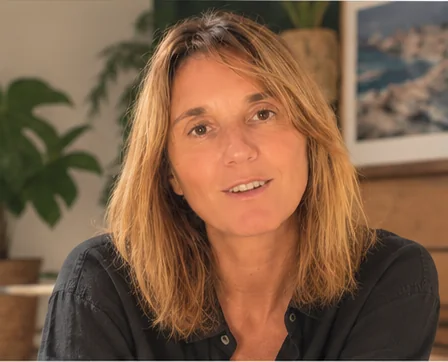
The LeReset method grew out of nearly twenty years of experience, training and support, at the crossroads of women's health, nursing care, relationships, sexuality, somatic approaches and the exploration of psychological mechanisms.
My path has led me to work with women in very different settings: maternity, gynaecological oncology, support around the menstrual cycle and hormonal questions, sexuality, relationships and life transitions. I then enriched this experience with training in somatic practices and various therapeutic approaches.
This diversity means I don't reduce a difficulty to a single explanation, or try to solve everything with a single tool.
An emotional difficulty is not always just a thought to change. It can also involve bodily reactions, protective strategies, relational habits or physiological factors that deserve attention. That is why I bring several dimensions into my work:
To explore the sensations, emotions and reactions that arise.
To understand patterns, beliefs, inner conflicts and protective mechanisms.
To take into account stress, the sense of safety and the capacity to move through an emotional experience.
Especially hormonal questions and life transitions, which can affect sleep, energy, mood, cognition and desire.
To turn insights into new, concrete possibilities in daily life.
Each accompaniment follows a common thread, but the path depends on the person, her request and what comes up during the session.
I rely on careful listening, bodily signals, any resistance, the level of emotional safety and my experience to choose the most relevant practices: breath, movement, somatic exploration, parts work or other tools from my training.
The aim is not to fit everyone into a pre-set method. It is to use the right levers at the right time, respecting each person's pace and resources.
Pause, release the tension of the moment, come back to the body and find enough presence to begin.
Put down what is on your mind, feel heard and identify what you really want to change.
Listen to sensations, emotions, patterns and any resistance to better understand what is at play.
Use the right practices to explore other responses, shift certain automatic reactions and open new possibilities.
Find your bearings, consolidate what has emerged and decide how to put it into practice in daily life.
These five stages are not rigid protocols. Regulation and safety are present throughout: we can return to an earlier stage or go deeper into another, depending on what you need.
We can understand intellectually why we react in a certain way without managing to change our reactions in real life.
This is why the work combines exploration with experience: feeling, observing, trying out other responses, finding support and identifying how to carry the work into everyday life.
Over the sessions, the aim is to develop a better understanding of yourself, more options in situations that keep repeating, and a freer relationship with your body, your emotions and your choices.
During perimenopause, this holistic view really comes into its own. Hormonal fluctuations can contribute to changes in sleep, mood, concentration or desire, while stress, relationships and living conditions also play a part.
My approach takes these interactions into account, without automatically attributing every difficulty to hormones. When useful, I work alongside a midwife and a gynaecologist.
LeReset is a holistic, human and personalised approach, so you no longer have to choose between understanding what you are going through and feeling it differently.
In Bagnols-en-Forêt or online, for personalised, in-depth support.
One-to-one sessionsIn Fréjus and the Pays de Fayence, to experience some of its benefits in a simple, joyful, shared way.
Workshops